Trinity Boxing Club · New York City · Est. 1920

The Early Members

These are the men who walked through the door first. Before the reputation, before the legend — there was just a gym, a ring, and a reason. We found the ledger. Here is what it says.

Membership Register · 1920–1929 · Lower Manhattan
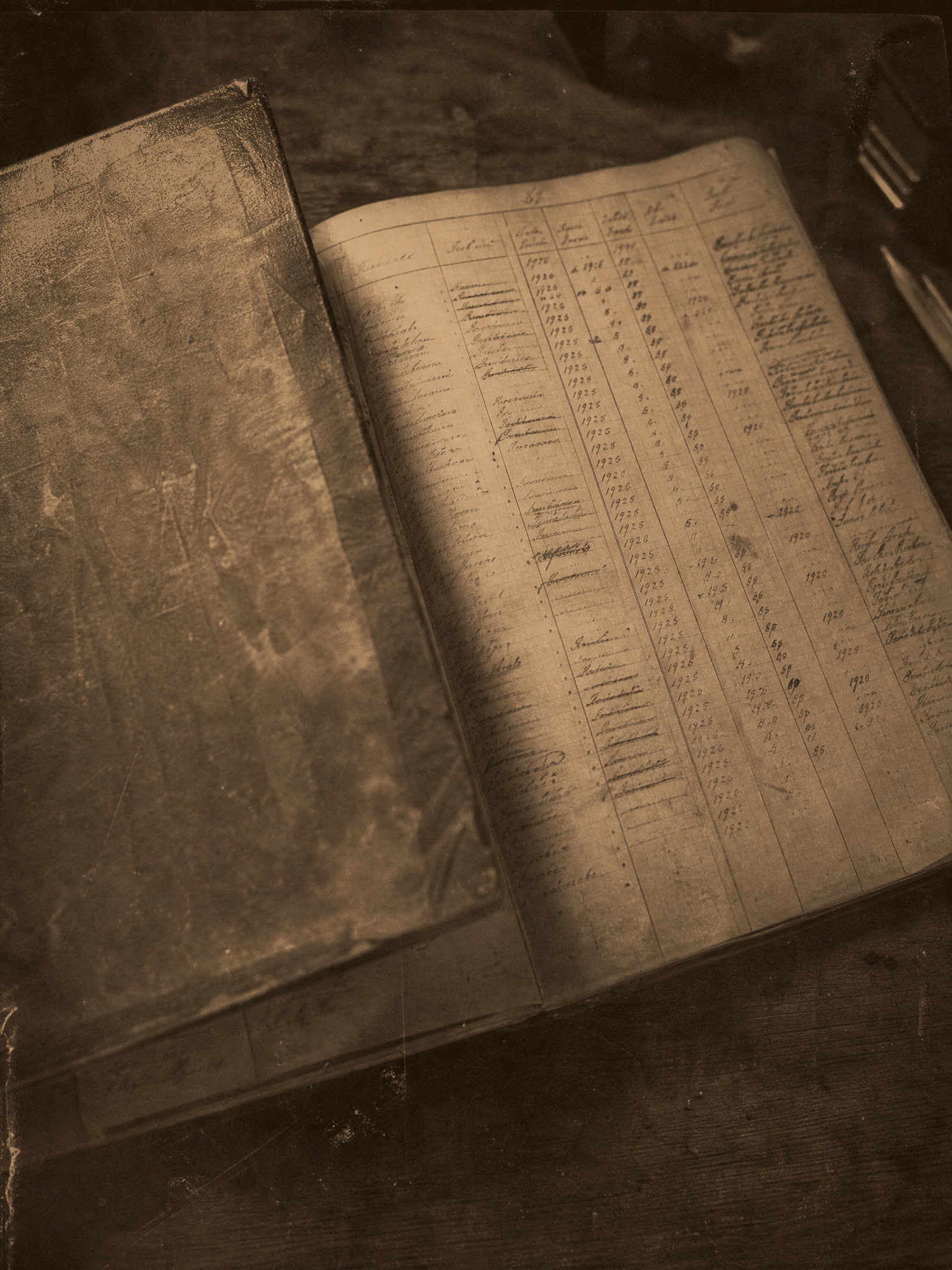
The original Trinity Boxing Club membership ledger, 1920–1928

Found in the Back of the Gym

In the autumn of 2019, during a renovation of the original Manhattan location, a cardboard box was discovered behind a false wall in the equipment room. Inside: a leather-bound membership ledger, a stack of photographic plates wrapped in newsprint, and a handwritten note that read, simply, "For whoever comes next."

The ledger covers the years 1920 through 1929 — the first decade of the club. One hundred and twelve names. Dock workers, schoolteachers, a rabbi, three policemen, a bootlegger who listed his occupation as "import & export," and a fourteen-year-old boy whose father signed the membership card because the boy couldn’t write yet.

What follows are the records of seven of those original members, reconstructed from the ledger entries, the photographic plates, and the oral history passed down through the family. Their names have been preserved exactly as written. Their stories are their own.

Ledger No. 1 · Trinity Boxing Club · Lower Manhattan, New York
Entries: 112 members · Period: Jan 1920 – Dec 1929
Condition: Fair · Provenance: Original gymnasium, equipment room wall cavity
The Membership · Selected Records · 1920–1929
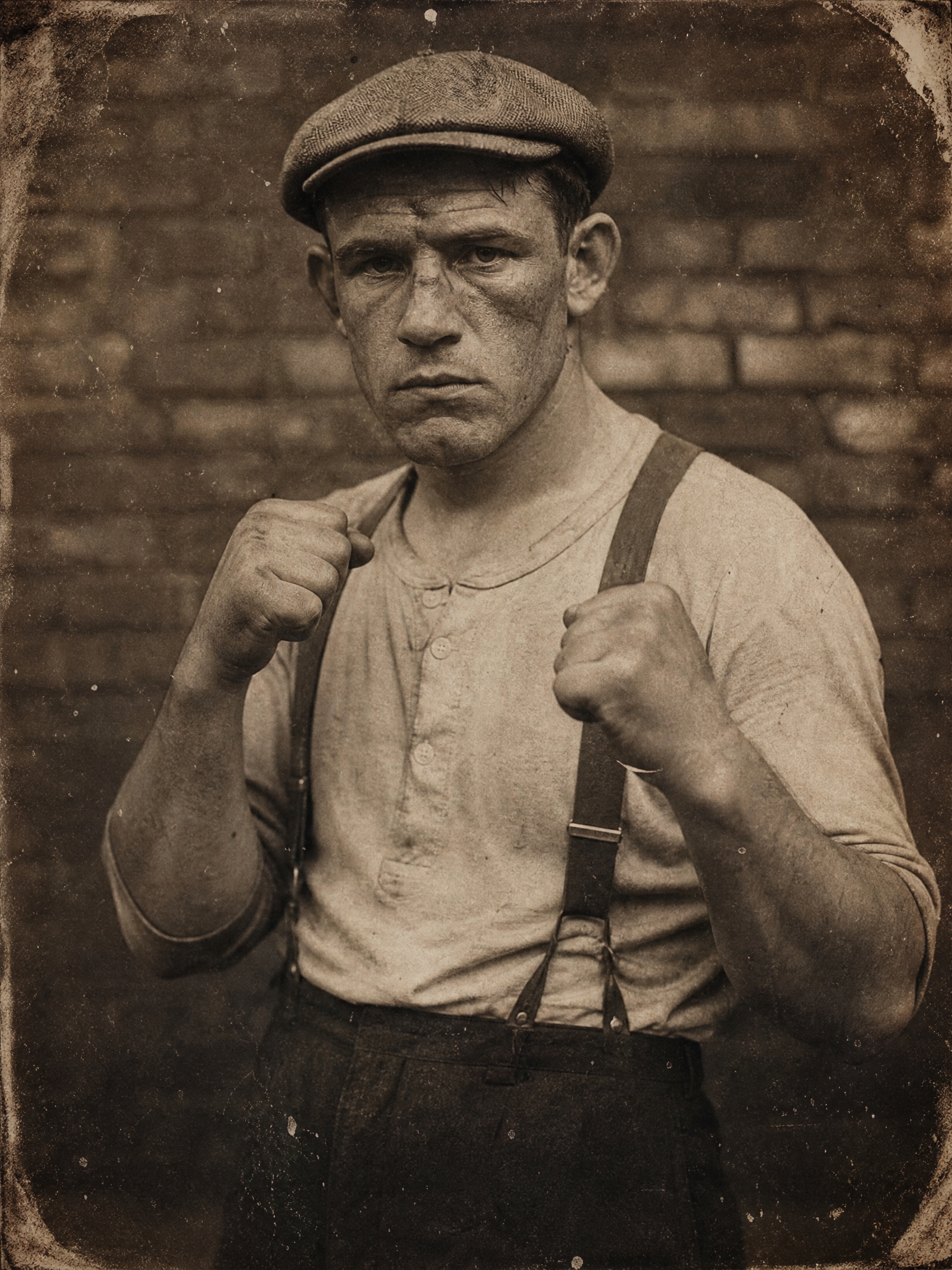
Thomas J. McNally, Member No. 001
Plate I · Photographed at the gymnasium · 1922
Member No. 001 · Charter
Thomas J. McNally
“The Ironworker”
Enrolled Jan 14, 1920
Weight Class Welterweight
Occupation Ironworker
Neighborhood Hell’s Kitchen

The first man through the door. McNally was a third-generation Irish-American who had been boxing in the streets since he was nine years old. He worked the steel on the new bridges going up across the East River, and he trained every night after his shift. He never fought professionally — he said the money wasn’t worth the damage — but he sparred with men who did, and they remembered it.

Trainer’s note, 1924: “Tommy hits like a man who has something to prove and nothing to lose. I have not been able to figure out which one it is. Neither has he.”
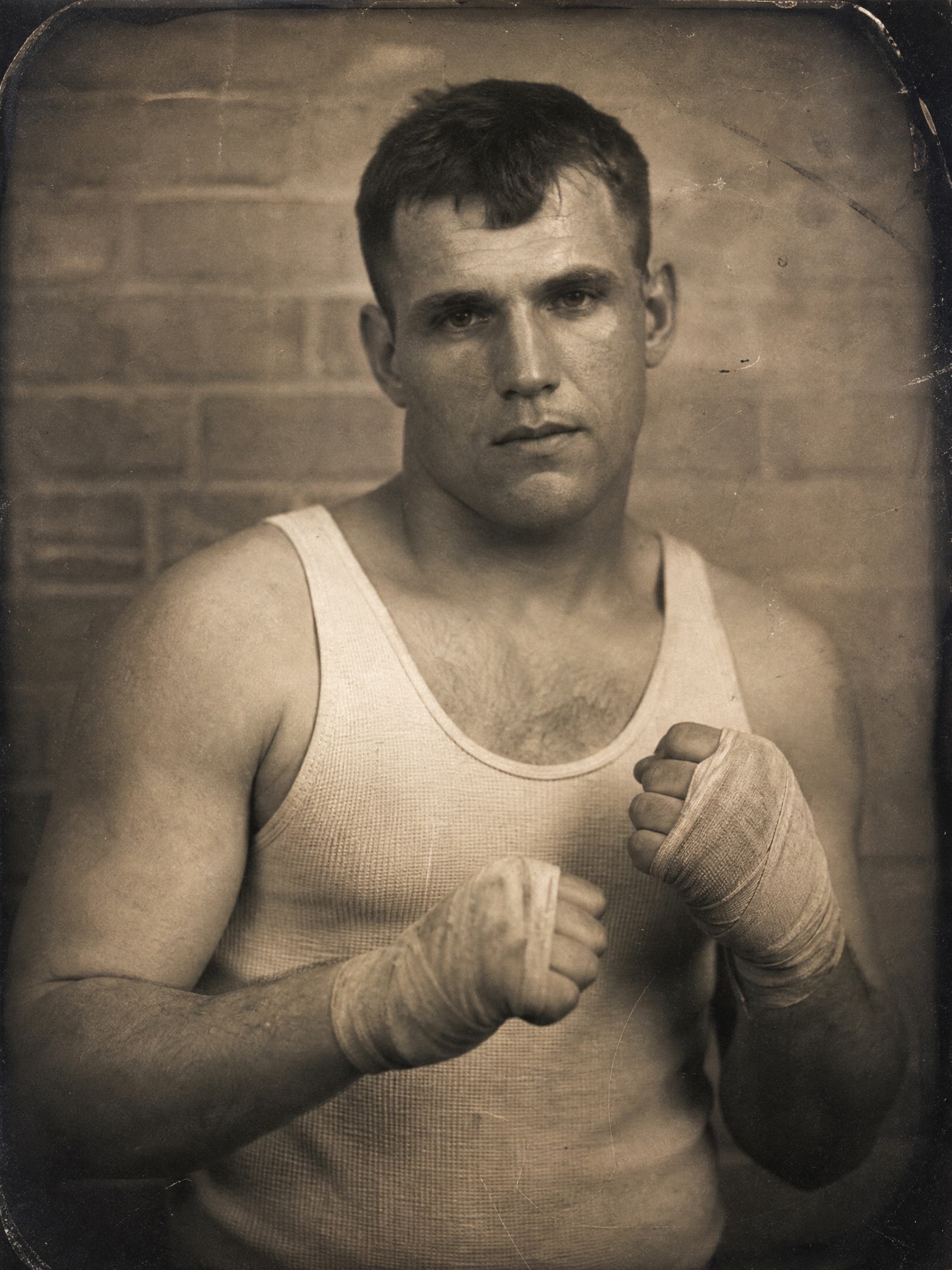
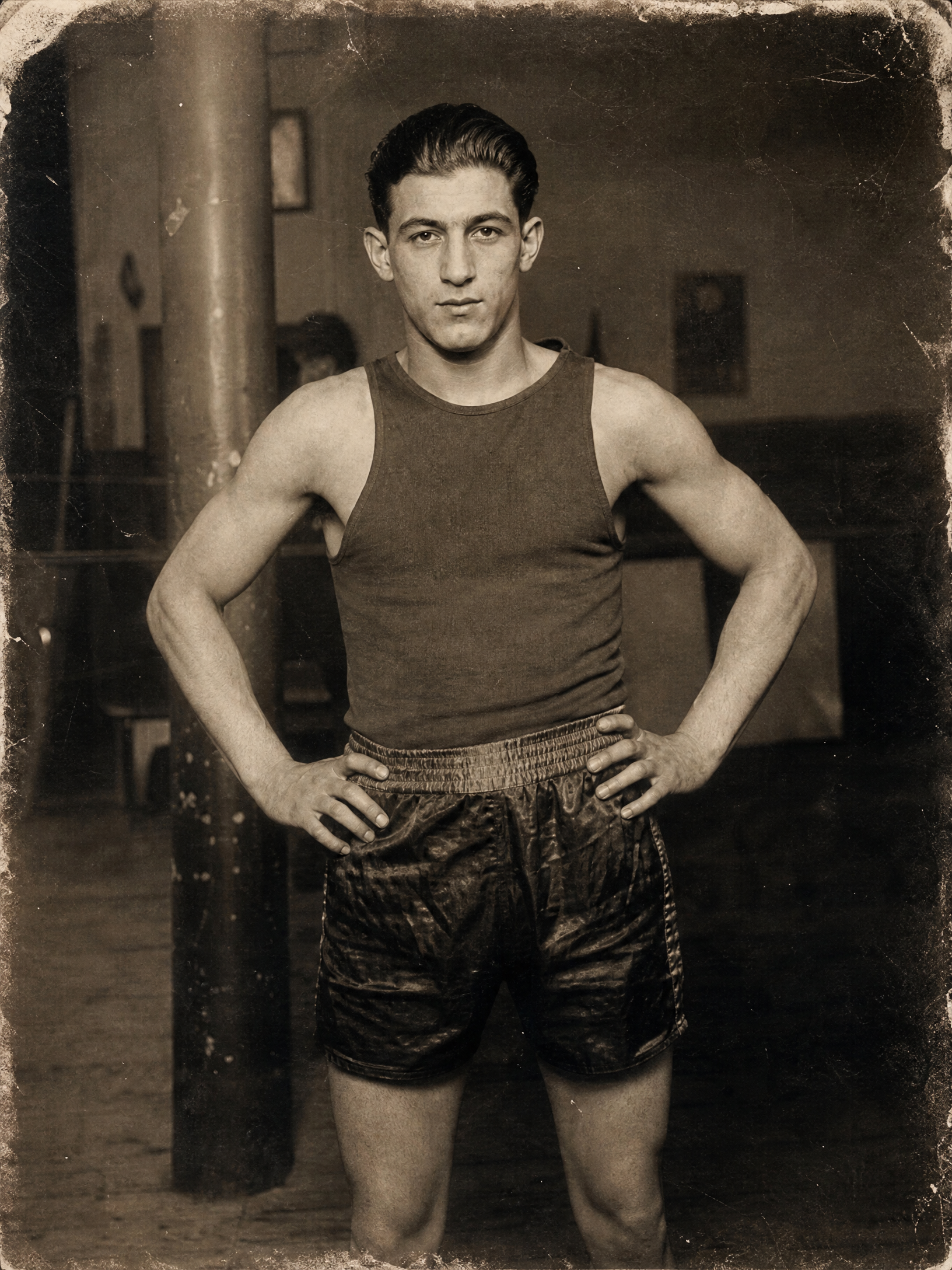
Stanislaw Kowalski, Member No. 007
Plate II · Photographed at the gymnasium · 1924
Member No. 007 · 1920
Stanislaw Kowalski
“Stan the Bull”
Enrolled Mar 3, 1920
Weight Class Heavyweight
Occupation Meatpacker
Neighborhood Greenpoint, Brooklyn

Arrived from Kraków in 1912. Spoke almost no English when he enrolled, but communicated everything that needed to be communicated with his hands. Kowalski was a natural heavyweight with a work ethic that embarrassed men half his age. He took the train from Brooklyn every Tuesday and Thursday without fail for nine years. He missed three sessions total: the day his wife delivered twins, and the two days he spent in the hospital after a loading accident at the docks.

Ledger note, 1926: “Dues paid in full through December. Brought a smoked sausage for the holidays. Accepted.”
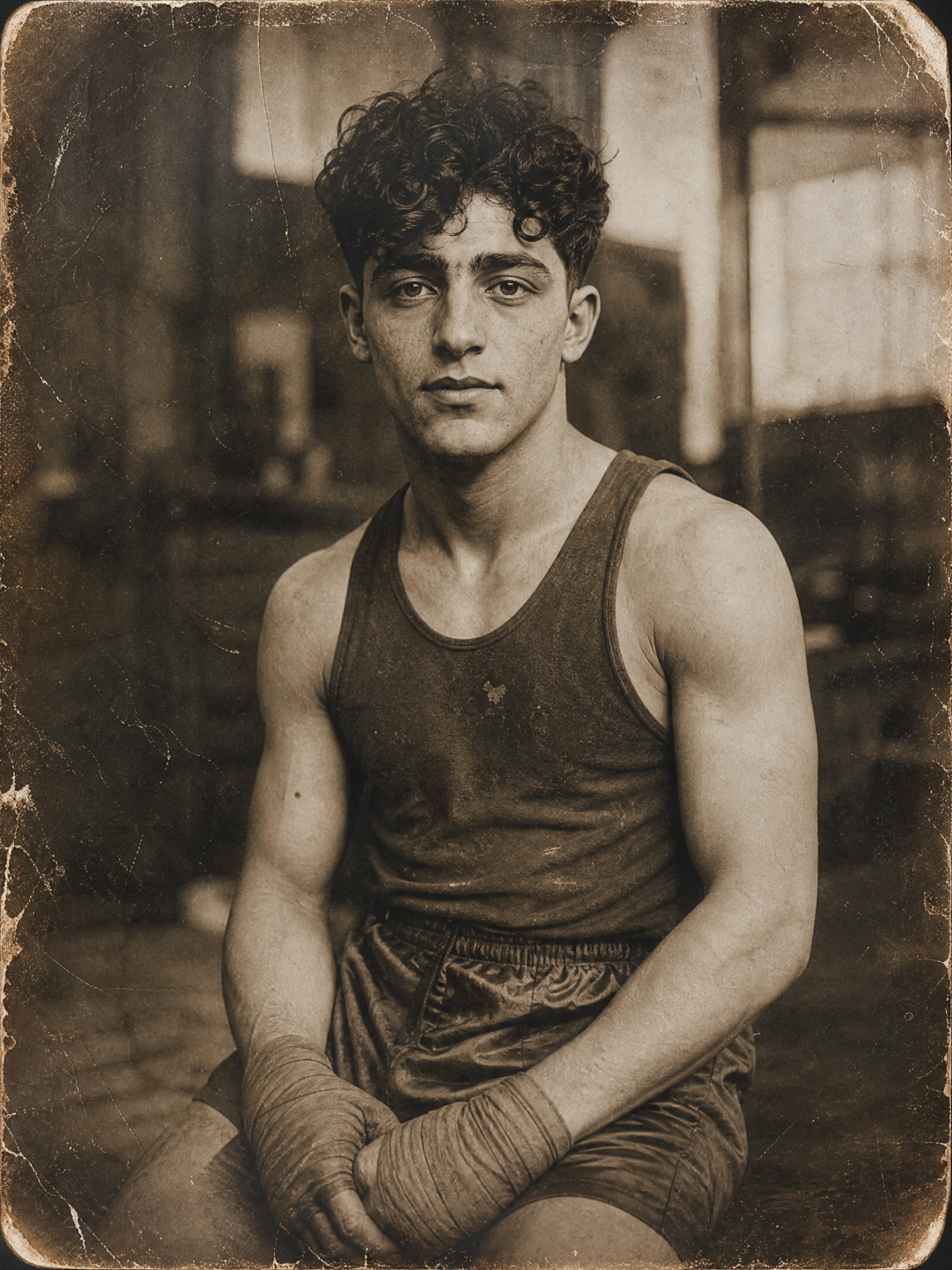
Carmine DeLuca, Member No. 014
Plate III · Photographed at the gymnasium · 1926
Member No. 014 · 1921
Carmine DeLuca
“The Barber”
Enrolled Feb 11, 1921
Weight Class Lightweight
Occupation Barber
Neighborhood Little Italy

His father ran a barbershop on Mulberry Street. Carmine swept the floor and listened to the men talk about boxing from the time he could hold a broom. By the time he walked into Trinity at nineteen, he already knew the theory. The gym taught him the rest. He had fast hands — the kind of fast that made experienced fighters blink twice — and he used angles the way a chess player uses the board. He fought twelve amateur bouts and won eleven.

Trainer’s note, 1927: “Carmine doesn’t fight angry. He fights like he’s solving a problem. That is a very dangerous quality in a lightweight.”
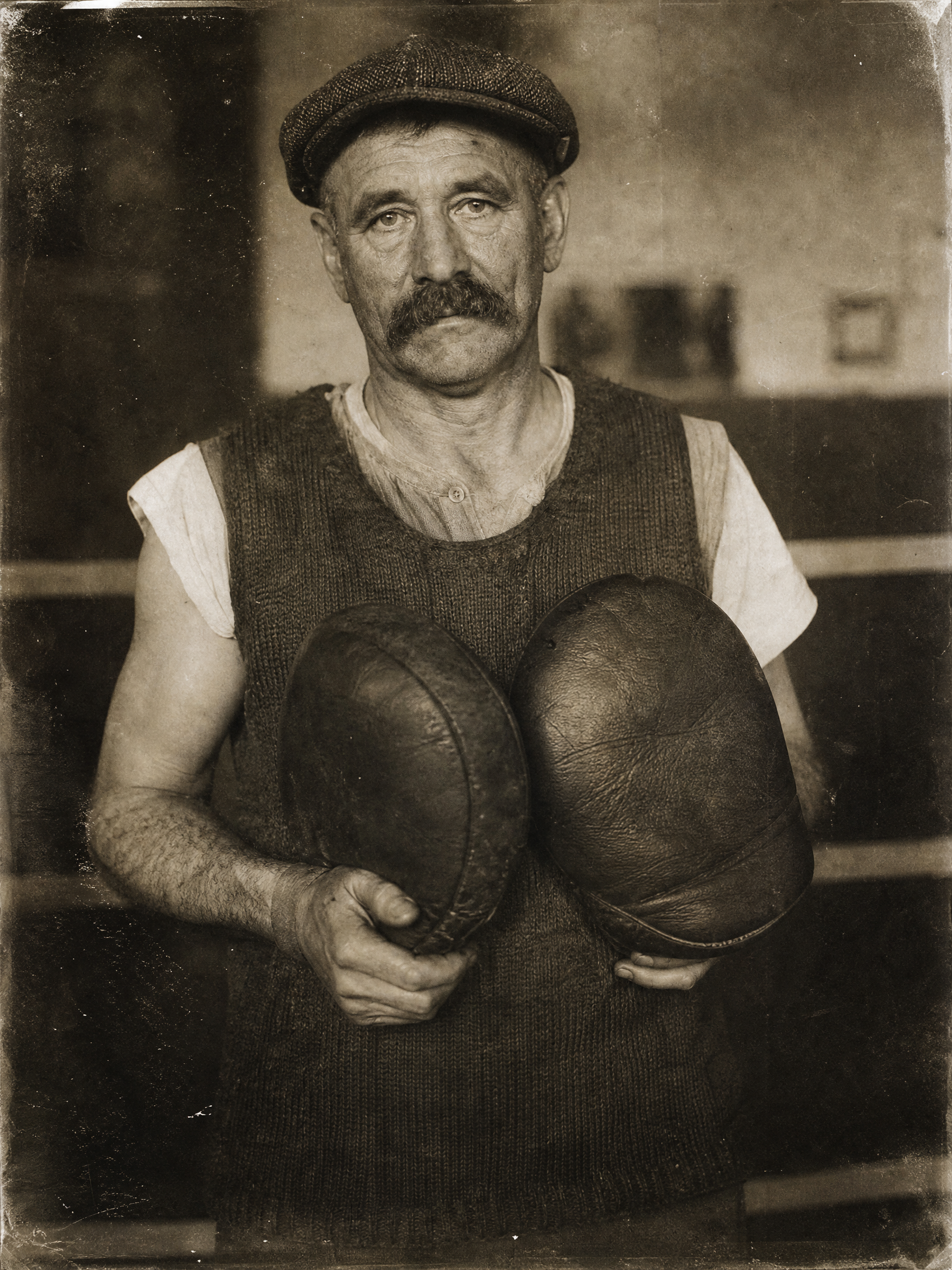
Patrick O'Malley, Head Trainer
Plate IV · Photographed at the gymnasium · 1920
Head Trainer · Charter Member
Patrick O’Malley
“Uncle Pat”
Enrolled Jan 14, 1920
Role Head Trainer
Record 34–8–2 (Pro)
Neighborhood Five Points

O’Malley had been a professional fighter in the 1890s and 1900s — a journeyman middleweight who fought everyone and was afraid of nobody. By 1920 his fighting days were behind him, but his knowledge was not. He was the one who set the rules of the gym, the one who decided who was ready to spar and who needed another month on the bags. He had a broken nose that had been broken four times, and eyes that had seen everything twice.

His rule, posted on the gym wall: “You may enter this gym for any reason you like. You may only stay if you are willing to work.”
Hyman Rosenberg, Member No. 023
Plate V · Photographed at the gymnasium · 1923
Member No. 023 · 1922
Hyman Rosenberg
“The Scholar”
Enrolled Sep 7, 1922
Weight Class Featherweight
Occupation Student / Pressman
Neighborhood Lower East Side

Rosenberg was studying at night and working the printing press during the day. He came to the gym because, as he told O’Malley on his first visit, “I am tired of being afraid on the subway.” He stayed for seven years. He was never a great fighter, but he became a very good one — technically precise, patient, impossible to rattle. He went on to become a schoolteacher in the Bronx and brought his students to the gym every spring.

Ledger note, 1929: “Hy is leaving for a teaching position. He paid his dues through the end of the year anyway. That is the kind of man he is.”
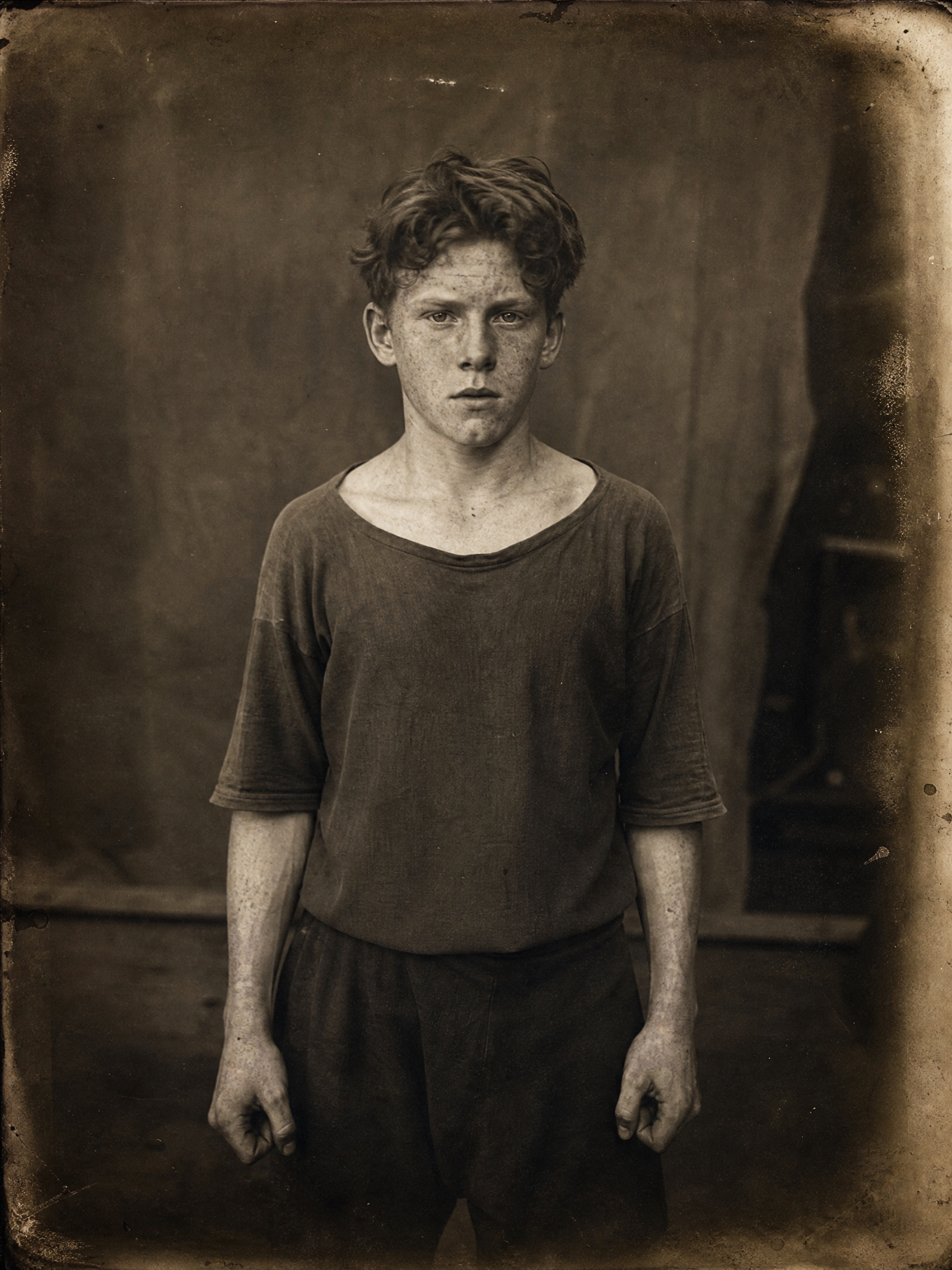
Declan McGrath, Member No. 041
Plate VI · Photographed at the gymnasium · 1928
Member No. 041 · 1928
Declan McGrath
“The Kid”
Enrolled Apr 2, 1928
Age at Enrollment 14 years old
Occupation Newsboy / Student
Neighborhood Hell’s Kitchen

His father signed the card. Declan was fourteen, skinny as a rail, and had already been in more street fights than most men twice his age. O’Malley took one look at him and said, “The street is going to kill you before you’re twenty. Come in here instead.” The boy came in. He grew up in the gym — literally. By the time he was eighteen he was one of the best young fighters in the city. He never forgot where he started.

O’Malley’s note, 1928: “This one has it. Whatever ‘it’ is. He doesn’t know yet. We will not tell him until he’s ready.”
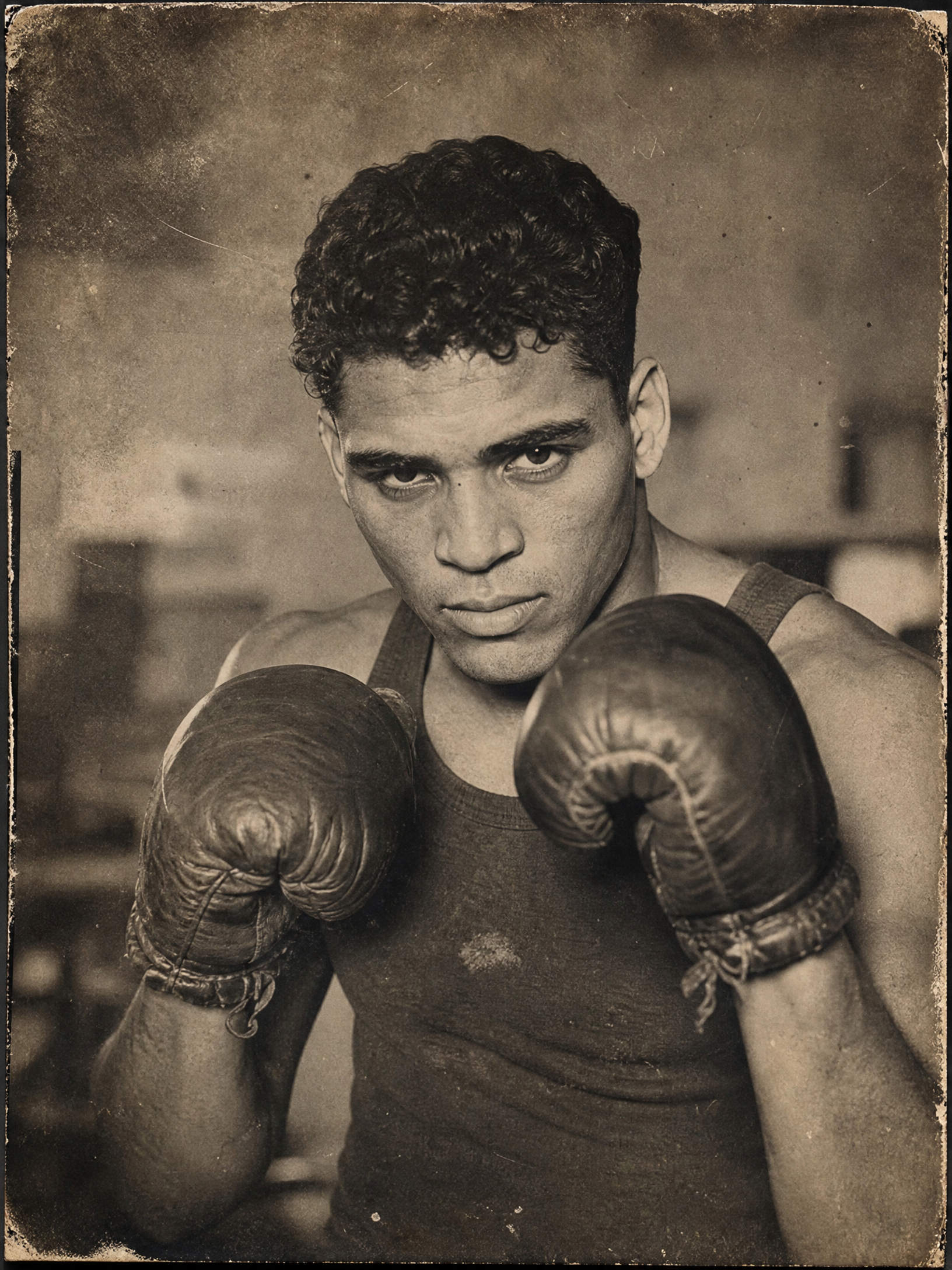
Rafael Santos, Member No. 038
Plate VII · Photographed at the gymnasium · 1927
Member No. 038 · 1927
Rafael Santos
“El Rápido”
Enrolled Jun 18, 1927
Weight Class Junior Welterweight
Occupation Factory Worker
Neighborhood East Harlem

Santos came down from East Harlem on the recommendation of a friend who told him Trinity was the only gym in the city where nobody cared where you were from. He was the fastest man in the gym from his first week. His combination speed was something the other members talked about for years after he left. He fought professionally for three years, went 18–4, and retired to open a hardware store in the Bronx. He trained his son in the back room.

Trainer’s note, 1929: “Rafael is leaving for a professional contract. We are proud and we are sad. That is the correct way to feel about this.”
Official Register · Trinity Boxing Club · Selected Entries · 1920–1929

The Membership Register

Transcribed from Ledger No. 1 · Partial Record · 112 entries total

# Name Enrolled Class Occupation Neighborhood Dues Status / Notes
001 McNally, Thomas J. Jan 1920 Welter Ironworker Hell’s Kitchen Paid Charter member. Never missed a Tuesday.
002 Brennan, William F. Jan 1920 Middle Police Officer Chelsea Paid Charter. Transferred to precinct in Queens, 1924.
003 Feinstein, Morris Feb 1920 Light Tailor Lower East Side Paid Charter. Brought his brother in 1921.
004 Vitale, Enzo Feb 1920 Heavy Longshoreman Red Hook Paid Charter. Retired 1926 — back injury.
005 O’Brien, James P. Mar 1920 Feather Printer Midtown Arr. 2 mo. Good man. Slow with money. Always squared up.
007 Kowalski, Stanislaw Mar 1920 Heavy Meatpacker Greenpoint Paid Came from Brooklyn every session. Reliable as the tide.
009 Goldberg, Samuel Apr 1920 Light Rabbi Lower East Side Paid Trains Tues/Thurs only. Does not spar on Fridays.
014 DeLuca, Carmine Feb 1921 Light Barber Little Italy Paid Amateur record: 11–1. Fast hands. Very fast.
017 Callahan, Dennis May 1921 Welter Import & Export Lower Manhattan Paid (cash) Occupation unverified. Pays on time. No questions asked.
023 Rosenberg, Hyman Sep 1922 Feather Student / Pressman Lower East Side Paid Left 1929 for teaching post. Paid through year-end.
031 Marchetti, Salvatore Jan 1924 Middle Construction East Village Paid Strong. Learning patience. Progress noted.
038 Santos, Rafael Jun 1927 Jr. Welter Factory Worker East Harlem Paid Turned pro 1929. Record: 18–4. Our pride.
041 McGrath, Declan Apr 1928 Light Newsboy / Student Hell’s Kitchen Paid (by father) Age 14. Father signed. The best prospect we have seen.
044 Huang, Wei-Lin Jul 1928 Bantam Restaurant Worker Chinatown Paid Quiet. Watches everything. Learns fast.
051 Washington, Earl Nov 1928 Middle Musician Harlem Paid Plays trumpet at night. Trains mornings. Disciplined.
Ledger No. 1 · Trinity Boxing Club · Lower Manhattan, New York · 1920–1929 · Partial transcription — 15 of 112 entries shown · Original ledger preserved in the club archive.

They Built the House.
We Keep It Standing.

Every gym has a founding generation — the ones who showed up before there was a reputation to show up for. They came because they needed something the street couldn’t give them and the church couldn’t teach them. They came because a boxing gym is one of the few places in the world where the only thing that matters is whether you can do the work.

One hundred and twelve names in that ledger. Dock workers and rabbis, newsboys and bootleggers, a musician from Harlem and a tailor from the Lower East Side. Different neighborhoods, different languages, different reasons. Same ring. Same rules. Same gym.

That is still the deal. It has not changed in a hundred years. Come in. Do the work. Everything else follows.

Step Into the Gym →